Friday, April 26, 2013

The prayer of a wise fool


I am weary, O God;
I am weary, O God,
and worn out.
When I read Proverbs 30 for the first time, I could hardly believe that the words were just — there, in the holy scripture, staring me in the face. I mean, how did he know? Agur, a stranger with a strange name gave words to the prayer my soul so desperately needed to pray.
Surely I am too stupid to be a man.
I have not the understanding of a man.
I have not learned wisdom,
nor have I knowledge of the Holy One.
It was strangely liberating to confess my stupidity. Though my version is so much less poetic. It usually goes something like this: "Dumb! Dumb! Dumb! Why am I so dumb?" Sometimes, the most truthful thing we can pray is simply, I don't know, Lord, I just don't know.

Who knew? The Word of God is so vast and so complete that it even has a chapter on "How to Pray on Days When You Feel Stupid and Tired: For Dummies." While the Psalms teach us how to weep over our iniquities and meaningless suffering, Agur gives us words for grey skies and a weary heart.

Here at the end of the magnum opus of Hebraic proverbs, Agur had nothing but a heavy sigh. He understood just how far short he measured from what was required of him. The chasm between life before God and life in the world can sometimes be overwhelming. The Bible is not a checklist of all the things we need to do in order to be saved. Rather, it is a mirror for us to see ourselves, in order that we may know how much we are in need of a Savior. So, Agur prayed — tired and empty.

But he doesn't stay there.


Who has ascended to heaven and come down?
Who has gathered the wind in his fists?
Who has wrapped up the waters in a garment?
Who has established all the ends of the earth?
What is his name?
Agur beckoned his soul to remember the creation, the greatness of his God. Suddenly, the frame of his vision was blown up. Agur's focus shifted — from the narrowness of his introspection to the vastness of nature, from his own limitations to Yahweh's limitless power.

Who is able to hold the hurricane captive in the palm of his hand? Yahweh. Who can contain the oceans in the fold of his garment? Yahweh. He speaks and the mountains obey. The height of the heaven is nothing to him.

Great is the Lord and most worthy of praise.

And then Agur asked,
what is the name of his son?
As Hanan, my two-year-old, would say, "Jesus!"

Wait, what?

Um... Isn't Proverbs in the Old Testament? Jesus wasn't born yet.
Who, then, was this son of Yahweh that Agur spoke of?

The relationship between father and son is the backbone of the book of Proverbs. Chapters 1 through 9 are instructions told in the voice of a father to his son. They are the foundation, the context, the setting of the entire book. The son is the recipient of the father's discipline and reproof, the one listening to his father's voice.

Yahweh is a father.  "The Lord reproves him whom he loves, as a father the son in whom he delights" (Prov 3:12). Therefore, whoever listens to Yahweh's voice and follows his way is a child of God.

Who, then, is the son of Yahweh? Who is his daughter?

You are, O weary soul.

"Come to me, all who labor and are heavy laden, and I will give you rest."
(Matthew 11:28)


Here are my take-away points from Agur on "How to Pray on Days When You Feel Stupid and Tired: For Dummies."

1. Remember Yahweh
     a. Speak to him
     b. Beckon your soul to remember his power and his strength
2. Remember the nature of your relationship with this great and awesome God.

He is your father. He loves you and he delights in you.
And for our weary days, this is enough for us to live on.

Tuesday, April 16, 2013

True religion is like singing to a baby


Where I give myself, entirely, to another without wanting anything in return.

Where I find joy, in its fullness, solely in the pleasure of the other.

Where I am content, simply because I am near him.


*I've reflected on the same idea, with a lot more words, here: "For No Other Reason."


Monday, March 25, 2013

Praying for Christ

I am indebted to my parents for teaching me to pray as a child. When I was five or six, I was given the all important responsibility to pray for the health and wellness of our chicken. I prayed for angels to guard the chicken coops and keep them safe from snakes and biawak at night. My dad was a pastor in the remote regions of Malaysia. But I digress.

Prayer, to me, was like a checklist. Or, at worst, a wishlist. Sicknesses, check. Friendships, check. Exams, check check check check. Finances, check. Unsaved friends and relatives, check. Safety, check. The possibility of future romance, giggle giggle check. Of course, I say more than just "check" in my prayers. But the idea is that I asked for "God's will to be done" without really knowing what I was asking for. I assumed God's will was mysterious and unknowable.


The big boys came down with the stomach flu last week. Hanan first, then Emeth. My little balls of energy and unceasing chatterboxes were uncharacteristically quiet. During the day, they took turns spilling fluids of all kinds. During the night, they woke up every hour, crying, and feverish with hurting tummies.

My default prayer would be for the pain to go away, for healing, and soon. But, is this all I can pray for? Even children of non-Christians eventually recover from the stomach flu. How then do my prayers affect my family? What difference do my prayers make? What is the point in praying? When they are better, should I give thanks for the healing as the work of God or just accept it as the natural course of things?

What am I to pray for?


Our life of prayer (or lack of) reveals the desire of our hearts. The prayers we voice before God and before one another are statements of what we think we need, what we care most about, what we love most.

If my prayers are only about my external circumstances and if I seek God merely for his blessing and protection, my regard for God is as a genie in a lamp. My wishes are his commands. I am the master and God is the slave.

Let me emphasize here that there is absolutely nothing wrong with praying for our circumstances. But praying merely for God's blessings is not enough. We find wonderful examples in scripture of how God changes the circumstances of his people. Even so, the needs and sufferings of this world are minor emphases. Miracles are but signposts that point to greater realities.

God separated me unto the Gospel, made me his child, to reveal his Son to me and through me. This is my Father's will, that I may know his Son. And while I learn to behold him, my Father promises that I would become more like him. Therefore, last week, as I was praying for my sick children, I prayed for Christ.

In their pain and discomfort, I prayed that my children would learn to turn to the Lord for help and courage. I prayed for grateful, trusting, cheerful hearts. I prayed that we, their parents, would be the willing hands and feet of Christ. I prayed that we would grow in kindness, patience, and compassion for one another. I prayed that in our (teeny-tiny-relatively-minor) suffering, we would have a greater longing for Christ and to be with him forever. I prayed that our sickness would not be wasted, but that it would help us remember Christ.


*David Powlison helped me tremendously while I was thinking through this subject, "Modeling Grace through Prayer Requests."

Saturday, March 16, 2013

In remembrance of me


Even before the first bite of the forbidden fruit, there was ingratitude. Because we were ungrateful, we wanted to be God rather than obey God. Because we were ungrateful, we believed in the serpent's lies rather than God's instruction.
For although they knew God, they did not honor him as God or give thanks to him, but they became futile in their thinking, and their foolish hearts were darkened. (Romans 1:21)
Ingratitude is the root of the first sin.
Ingratitude is, in fact, the root of all sin.

My ungrateful heart seeks after things apart from God. He is not enough for me.
My ungrateful heart disregards God, dismisses his promises. I forget. 

Not giving thanks is no small thing. Gratitude is not a warm fuzzy feeling. It is more than good manners. More than the five-second prayer before meals. It is more than the obligatory thank-you notes I sent after our wedding, and the lip-service I pay at the end of emails.When I teach my children to say their pleases and thank yous, I am not just teaching them to be polite. I am teaching them a disposition towards life -- how to live rightly. I am teaching them how to worship.

While ingratitude is the root of all sin, gratitude is the beginning of worship. Gratitude is the very posture of God's children. Gratitude is the mark of the Christian. Sorrowful, yet always rejoicing. Having nothing, yet possessing everything (2 Cor 6:10). We lament, yet we give praise. We grieve, yet we give thanks.

Gratitude is our response to what God has done. Because he first loved us, we love and fear him. Gratitude is the fountain from which all else flows: love, joy, peace, patience, kindness, goodness, faithfulness, gentleness, and self-control.


Transition from two kids to to three kids has been full and happy, but not easy. There are days when tiredness and anxiety cloud my eyes like thick black smoke, distorting reality. This is the battlefield of my sanctification. Here, holding crying babies at 4  in the morning, I am learning to fight against my self-love.

Suddenly, my mind sees the significance of the thanksgiving passages in the gospels, Paul's letters, and the Psalms. Jesus made much of the only leper who remembered to say thank you. The Samaritan came back not merely to be polite.  He was a changed man. He turned and worshiped God.

Thanksgiving marks the climax in many of the David's psalms and Paul's letters. These men were not merely paying lip-service. They gave thanks not because it was in-style or because it was the "right" thing to say. No! They were engaged in battles. Whether they were fleeing from their enemies or sitting in prisons, they were warring against their flesh, waiting upon the Lord.

God has not left his children defenseless. He has given us weapons to fight and shields to resist. In bad times, gratitude guards our mouth from complaining and our hearts from losing hope. In good times, gratitude guards us against the first sin -- pride, vanity, and the desire to be God.

So, sing! Rejoice! Proclaim his amazing grace. Declare in the face of despair that Jesus has conquered sin and death.

Thank you Lord for the Gospel. Thank you Lord for upholding all things in your hands. Thank you Lord for my children, my husband. Thank you Lord for you have not left me an orphan. Thank you Lord for you have not left my children orphans. Thank you Lord for giving us to each other. Thank you Lord for giving yourself to us.

It begins by remembering.

Jesus gave his disciples a ritual on the night he was betrayed. It is no coincidence that the early church called it the Eucharist, which means thanksgiving in Greek.  This is my body broken for you. This is my blood that was shed for you. Do this in remembrance of me.

This is the Word of the Lord.
Thanks be to God.


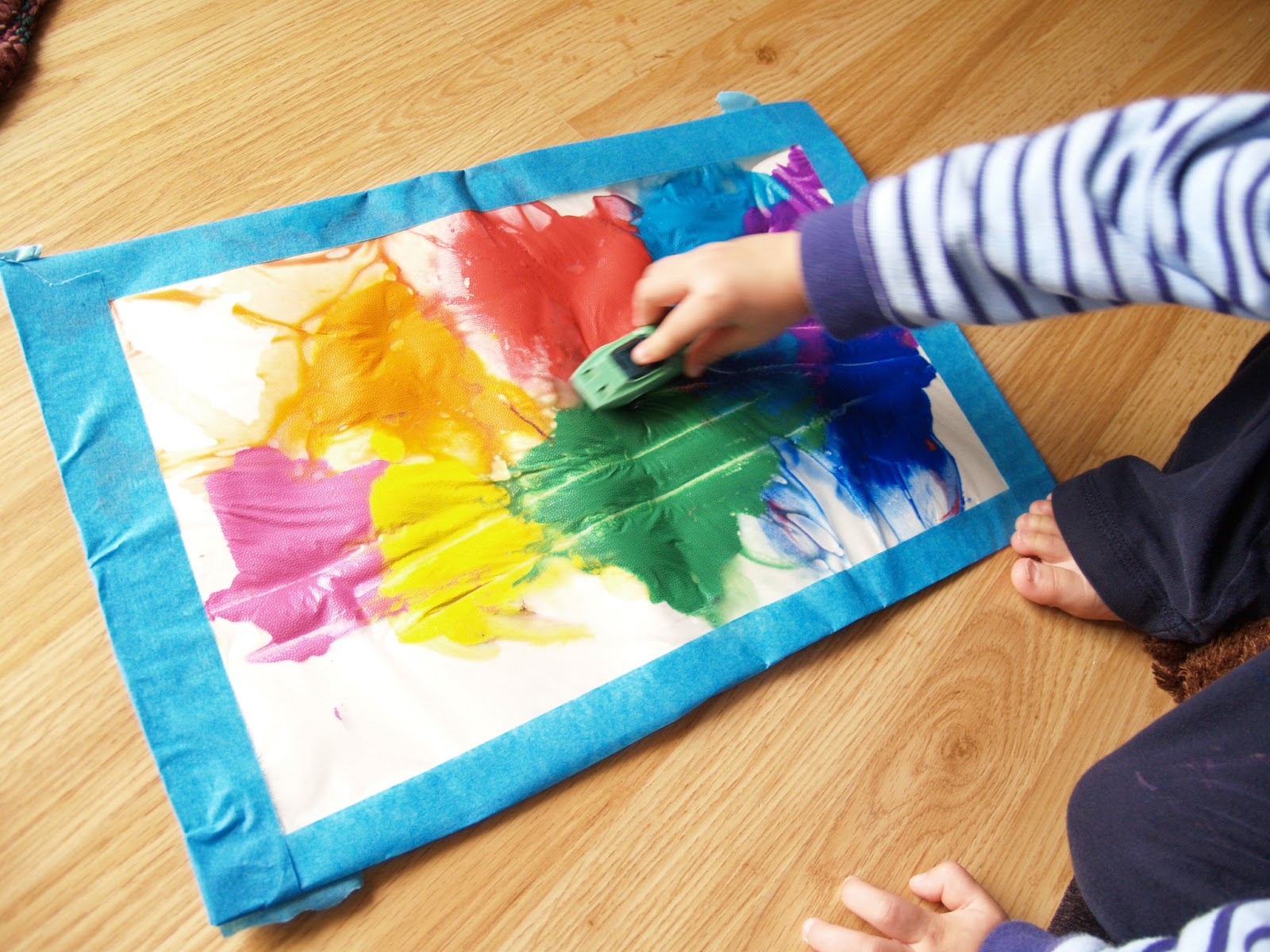
Mess-free finger painting. I wrapped the paint and paper under a sheet of plastic. =)

Saturday, February 16, 2013

You are myself

Photo Credit: Catherine Yong

I came across a letter written by Helmuth von Moltke to his wife, Freya von Moltke 12 days before his death. It is one of sixteen hundred letters he wrote to her during their years of marriage. He wrote this one from a Nazi prison where he was awaiting his execution for his resistance against the brutality of Hitler's regime.

I do not pretend I fully understand his words, nor the love his had for his wife.
But I want to.

So, I am saving his testament here, in the hope that I might grow to understand. For I believe this is close to what the Lord means when he says that we are to love one another.

January 11, 1945

“And now my dear, I come to you, I have not included you in my list because you, my dear, stand in a totally different position from all others. You are not one of God’s agents to make me what I am, rather you are myself. You are my thirteenth chapter of the First Epistle to the Corinthians. Without this chapter no human being is truly human... Without you, my dear, I would not have ‘had’ love. I should not think of saying that I love you; that would be quite false. Rather you are the one part of me, which would be lacking if I was alone…It is only in our union—you and I—that we form a complete human being…And that is why, my dear, I am quite certain that you will never lose me on this earth—no, not for a moment. And this fact it was given us to symbolize finally through our common participation in the Holy Communion, that celebration which was my last.”
Helmuth von Moltke was hanged in prison on January 23, 1945.

Wednesday, February 13, 2013

love you forever


My dear boys,

I read this book to you last night. You were very nice and soft to cuddle. When I read it as a little girl, I thought the mommy the in the story was a bit weird, her love was a bit crazy. Just like you, I thought she was a bit silly, rocking her adult son like that. But now that I am a mommy, I understand why she would do that. I would be missing you too when you are no longer by my side.

I may not climb into your bedroom window using a ladder (I'm sure you'd oblige giving me a set of your keys), but remember, I will be praying for you.


Your grandmother, my mother, used to tell me that she prayed for me when she couldn't sleep at night. I thought I understood what she was saying, but I didn't.

When mommy tells you that I am praying for you, I am really telling you that I love you. I love you when I see you in the morning and when I sing to you at night and all the hours in between. I am so happy to know you, so proud to be your mommy. I loved you when I first laid eyes on you, I loved you today when you fit so perfectly on my lap, and I will love you always and always.

When mommy tells you that I am praying for you, I am really telling you that even though I want to be with you wherever you go, I cannot.

For a short while, our world is mostly you and me. You are what I hear, smell, see. I am yours and you are mine. This is a very special time. We get to celebrate every small success together. I get to wrap your fingers with band aids, and kiss every hurt away. Daddy gets to hold you when you get your shots, even when you were kicking and screaming at him. We get to remind you to turn, and come back to the way of grace.

There will come a day when we will not be there to hold you. Pain will come. You will feel loneliness, rejection, betrayal. You will lose your way. You will find yourselves tossed in storms too great. Your boat will seem very small, and the waves will be very tall. You will be scared and will want to give up. You will know that you are not enough.

Remember, mommy is praying for you.

I am praying because I know God is with you. He will go with you to places where I cannot. His eyes will watch over you. His arms will fight for you. His hands will uphold you. His love will cover you. He loves you more, much more than I ever could. His love is crazier than climbing up a ladder into your room. He came down to live with us, to be us, to die for us.

You must remember to call upon him. Turn to him when you get lost. Fix your eyes on the cross. He is your sword, your shield. He is your light when the days are dark. He is your shepherd, you will not want anything else. He will bring you home.


Saturday, February 9, 2013

Soul, be not anxious

My dear friend,

In case you need to hear these words as I do today.
I will help you.

That is very little for me to do, to help you. Consider what I have done already. What! not help you? Why, I bought you with my blood. What! not help you? I have died for you; and if I have done the great, will I not do the less?

I will help you.

It will cost me nothing. Redeeming you cost me much, but I have all and abound. Help you? You need never fear that. If you need a thousand times as much help as you do need, I would give it to you; but it is little that you do require compared with what I have to give. It is great for you to need, but it is nothing for me to bestow. Fear not.
I will help you.
-Charles H. Spurgeon, The Spurgeon Series 1857 & 1858