Tuesday, September 15, 2015

Dust, not donuts

As I child, I often wondered what God meant by "you shall surely die." Adam and Eve were walking and talking after they ate the fruit. Did God mean they would die a slow death? Or that they lost their "eternal" life? What was this death?


I had a song stuck in my head."Life without Jesus is like a donut. There is a hole in the middle of your heart." I learned it as a child in Sunday school.

But life without Jesus is not like a donut, not even one little bit. Life without Jesus is death. And death is nothing like a donut.

Adam and Eve chose death. The serpent counseled Eve to love herself. She should get to decide what was good and evil. She loved the fruit hanging from the forbidden tree, more than she loved her God. So, she took, and she ate. She then gave it to Adam; he took, and he ate.

Death came immediately. They died the moment they ate the fruit. No, Adam and Eve did not die a slow death. God said, "in the day that you eat of it you shall surely die." Their eyes were opened, just as the serpent promised, unto death. They lost not only their eternal life but life—altogether.

Death was never walking beside your God in the Garden again.

Death was choosing to believe a lie, instead of the truth.

Death was seeing the bone of your bones, flesh of your flesh—ashamed.

Death was losing the bold, unhindered trust you once had in your friend.

Death was being afraid of your Father when he called—because you betrayed him.

Death was homelessness.

Death was hunger.

Death was losing both your sons, because your firstborn child killed his brother.

Death was hate, jealousy, pride, shame, fear.

The rest of Genesis echoed this death. And he died, and he died, and he died.

No. Death is not like a donut. The "hole" in our hearts are not holes. Our hearts are aching abysses of desires, universes of emptiness. We rebelled against our Father who made us. We betrayed him to please ourselves. Lost in sin, we are dead souls, shells full of dust.


So, Jesus wept.

Jesus wept as he stood before Lazarus' tomb. He wept not over Lazarus' physical death; he knew that Lazarus would rise again.  Jesus was weeping for death—altogether. He was weeping for his broken people. Mary and the Jews—the flesh of his flesh, and the bones of his bones—were dead in their hate and jealousy and pride and shame and fear.

So, Jesus said, "I am the way, the truth, and life. I am the door to life. I am the resurrection and the life. Whoever believes in me, though he die, yet shall he live, and everyone who lives and believes in me shall never die."


Soul, come.
Soul, there is now therefore no condemnation for those who are in Christ Jesus. For the law of the Spirit of life has set you free in Christ Jesus from the law of sin and death.

Thursday, September 3, 2015

Choose the harder way

Esther and I met in the rain. She found me under a tree.

Hans and I were newly married, and he was the new minister at our new church. He was playing ultimate frisbee with everyone else, and I did what I always did when I felt insecure — I hid behind a book.

Esther, seventeen at the time, came over in her pale blue t-shirt, with a smile that unveiled her perfect teeth. She said, "Hi, I'm Esther. Which high school do you go to?" I didn't look like the pastor's wife, apparently.

She saved me from sulking that day.


I came across a strange advice from Elisabeth Elliot:
Choose the harder of the two ways. If you have eliminated all other possibilities and there still seem to be two which might please God, choose the more difficult one. "The way is hard, that leads to life," Jesus said, so it is likely that he is asking us to will against our will (A Slow and Certain Light, 115).
She placed this counsel at the very, very end of her book on knowing the will of God. After all is said and done — after we prayed, searched the Scripture, evaluated the motives of our hearts, counted the cost, listened to the counsel of those wiser than ourselves — if both choices seems to be equally good and right, choose the harder way.

But what if the harder way is not God's will? He commands us not to be afraid. God is with us and he is near those whose hearts are bent on knowing and doing his will. Just as he prevented Abraham from sacrificing Isaac, and David from building the temple, he will help us know if this is not the right way. Trust him.

The Lord is always looking at the hearts of his servants. Are we willing to take up staggering tasks for his name's sake? Are we willing to sacrifice, to die to ourselves? The Lord was please with Abraham and David because they were bent on doing hard things—for him, "You did well that it was in your heart" (I Kings 8:18).


"Choose the harder way" has been most helpful in my ordinary, daily deaths to self. Should I wash the dishes or check Facebook? Should I wake up when my alarm rings or sleep for another "five minutes"? After the service on Sunday, do I hang out with my friends or introduce myself to the new person? When provoked, do I speak my mind or sulk or pray for the one provoking me?

Clearly, I am not applying Ms. Elliot's advice quite right. I think she meant it for bigger decisions, when the all the options seem right and faithful. My daily choices are neither big nor are they equally "pleasing to God." The better thing to do is most of the time painfully obvious. The question is whether I would do it.

But—because I am prone to wander, "choose the harder way" pulls me away from my tendency to take the easy route. Ms. Elliot reminds me whom I am following, and why I am doing the things I am doing. I am to follow the pierced feet of my Lord. He chose the steep and the narrow, all the way to Golgotha.

Esther could have just focused on playing frisbee. And our lives would have gone on. And I would have kept pretending like I was reading my book. But the Lord was, and is, gracious. Esther chose to stop playing, and she came over to the lonely person under the tree, in the rain.


O to grace how great a debtor
Daily I’m constrained to be!
Let Thy goodness, like a fetter,
Bind my wandering heart to Thee.
Prone to wander, Lord, I feel it,
Prone to leave the God I love;
Here’s my heart, O take and seal it,
Seal it for Thy courts above.

Monday, August 24, 2015

Loved, not lover

In the gospel according to John, he omitted his name entirely and called himself "the disciple whom Jesus loved." I did not understand him. I wondered whether he was a little presumptuous.

Lately, the Lord has been showing me the ways I have been conceited. My motives, preferences, and fond desires are all hopelessly entangled in a mess of self. Even my tiniest sacrifices, moments of selflessness, are drenched in selfish and prideful thoughts. On my own, I do not, and cannot, love Christ.

In the words of the Puritans,
My best prayers are stained with sin;
my penitential tears are so much impurity...
I need to repent of my repentance;
I need my tears to be washed.
Valley of Vision, 136-137.

In John's eyes, he was unimportant, his name unnecessary. He was a witness to the Light, the Word who became dust—for dust's sake. John was not presumptuous when he called himself "the disciple whom Jesus loved." His love was nothing—compared to Christ's love for him. He was not a lover of Christ, but he was loved by Christ. The love of Christ defined John.

"Summer Showers" by Franklin Chang (title his)


A friend sent me a picture of the "art" he made with a respiratory mask, his medical journal, and an old envelope. I was strangely moved by the little gentleman with a hand in his pocket. I have seen this before, somewhere. I woke up the next morning and saw the story my soul knew well. My Savior once stood under the rain of death that I might live.


"We follow a stripped and crucified Savior," wrote Amy Carmichael to a prospective missionary, who was coming to India to serve her family of orphans. "Those words go very deep. They touch everything — motives, purposes, decisions, everything... Dear, you are coming to a battlefield" (A Chance to Die, 304).

Like the apostle John, the love of Christ compelled and constrained Amy Carmichael. They loved the dust at the foot of the cross. They held their lives loosely, and crucified themselves with Christ. It is difficult to imagine that they once struggled with selfish and prideful thoughts. But they must have, as they were sinners saved by grace.

So, the Lord is giving me strength and courage through their witnesses. I am tracing their footsteps, "the way of the Cross leads to the Cross and not to a bank of flowers." I am finding comfort in confessing that I am not a lover of Christ. But I am his, and I am loved.
Lord crucified, O mark Thy holy Cross
On motive, preference, all fond desires;
On that which self in any form inspires
Set Thou that Sign of loss.

And when the touch of death is here and there
Laid on a thing most precious in our eyes,
Let us not wonder, let us recognise
The answer to this prayer.
 Toward Jerusalem, 96.


Wednesday, July 8, 2015

Labor while you live

I love old letters. And this one was particularly meaningful today. It was written by a father to his daughter Esther on March 28, 1753:
Dear child,

We are glad to hear that you are in any respect better, but concerned at your remaining great weakness...

I would not have you think that any strange thing has happened to you in this affliction: 'tis according to the course of things in this world, that after the world's smiles, some great affliction soon comes.
God has now given you early and seasonable warning, not at all to depend on worldly prosperity. Therefore I would advise, that if it pleases God to restore you, to let upon no happiness here.
Labor while you live, to serve God and do what good you can, and endeavor to improve every dispensation to God's glory and your own spiritual good, and be content to do and bear all that God calls you to in this wilderness, and never expect to find this world anything better than a wilderness.
Lay your account to travel through it in weariness, painfulness and trouble, and wait for your rest and your prosperity till hereafter, where they that die in the Lord rest from their labors, and enter into the joy of their Lord.

These words, they strengthened me. And then, he made me smile.
As to means for your health, we have procured one rattlesnake, which is all we could get. It is a medicine that has been very serviceable to you heretofore, and I would have you try it still. If your stomach is very weak and will bear but little, you must take it in smaller quantities. We have sent you some ginseng...

Commending you to God, before whom we daily remember you in our prayers, I am

Your affectionate father,
Jonathan Edwards.


I have loved and used my Jonathan Edwards mug for ten years. I am happy to finally read the letter in its entirety. And ginseng was apparently available in New England in the eighteenth century. So weird.

I raise my mug to you, dear friend.
Let us labor while we live.


Wednesday, June 17, 2015

That nothing be lost

Our friend Eshan is living with us this summer. She cares for the boys in the mornings while I study for my Hebrew comprehensive exams.

We were talking one evening while I was picking up the boys' crumbs. We had rice for dinner, so the mess was quite a sight. Suddenly, Eshan froze. I realized then that I had popped a piece of teriyaki chicken into my mouth. "The chicken was fine," I explained. "It was clean. Not as juicy. But I rather not waste it."

She laughed. And I continued with my crumb picking. Later that night, we heard that Elisabeth Elliot died.


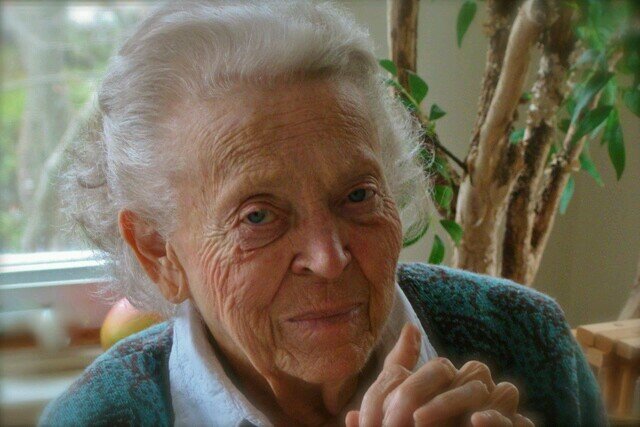
Elisabeth Elliot (1926-2015)


Emeth saw that I was sad. "Was Elisabeth Elliot your friend, mommy?"

"Kind of," I answered.

"Did you know her?" he asked.

"A little," I said.

"You knew her?" he gasped. "Did she know you?"

"No, she didn't know me," I replied. Thank you for making me smile, my inquisitive child.

Elisabeth Elliot didn't know me, though I had many cups of coffee with her. I met her in the beginning of January. At her table, I feasted on her stories and counsel. She gave me answers, and asked me new questions. I read and re-read her books as though they were long and wonderful letters to me. She feared no one and nothing, except for her Lord. She was my "older person," as Paul was to Timothy. And she died.

Jesus instructed his disciples to gather the crumbs after he fed five thousand men with five loaves of bread and two fish; I imagine there were also women and children. What a curious instruction. What did they do with the crumbs? "That nothing may be lost"—was the reason he gave to his disciples.

So, I continue with my crumb picking, gathering the bits and pieces that my teacher created. She left many baskets full. They are not as juicy as at first, but they are quite fine. Much tastier than dry teriyaki chicken.


Here are four of my favorite morsels from Twelve Baskets of Crumbs (1976).

She taught me to be a free woman:
"Missionary," of course, is a term which does not occur in the Bible. I like the word witness, and it is a good, biblical word meaning someone who has seen something. The virgin Mary saw an angel and heard his word and committed herself irretrievably when she said, "Behold the handmaid of the Lord." This decision meant sacrifice—the giving up of her reputation and, for all she knew then, of her marriage and her own cherished plans. "Be it unto me according to thy word." She knew the word was from God, and she put her life on the line because of it. The thing God was asking her to do, let us not forget, was a thing that only a woman could do.

The early history of the church mentions other women who witnessed—by ministering to Christ during his earthly work, cooking for him, probably, making a bed, providing clothes and washing them—women who were willing and glad to do whatever he needed to have done. (And some of you who despise that sort of work—would you do it if it was for him?) (163)

She taught me to love and mind the gaps:
The admired was, in all cases, something the admirer was not. There was a gap. It was noticeable and was accepted... They also bridged the gap somehow...

Mind the gaps—between men and women (God help us all if the idea of Unisex gets hold of us), between the stage and audience in a theater (I don't want an actor coming up my aisle), between those who know and those who don't know (let teachers teach, please, don't make them forever ask, What do you think?), and between the generations (let the young be young with all their hearts, and let me be old and admit it gracefully).

And let me be—let all of us—be humble enough to be enriched by what someone else is that I am not (51).


Writing was hard, even for her:

Writing, for me, is a painful business... An awful lot of time I spend trying to get things down on paper goes eventually into the wastebasket. And I hate to think how much of what doesn't go there should have.

Housework is not like that. You don't start out with any foolish and high-flown ideas about creativity and all that. You can do it without concentrating, and you can count on the results. The dishes sparkle, the bed is smooth, the meal—even if the cake falls—gets eaten (54-55).

She taught me to hope—in another world (when her second husband died):
It is out of the question for us to collect the crumbs "that nothing be lost." When a man dies it seems that nearly everything is lost, but that is not true. Hundreds, perhaps thousands, have been fed.

And although we have but fragments of a life, although we know even ourselves only in a fragmented way, eternity has been written in our hearts, and the pieces will one day be put together exactly as they were meant to go (69).


Tuesday, May 12, 2015

Be unafraid of nothingness

Chinese grocery stores are nostalgic places for me. A whiff of fishy odor greets me at the door. I am suddenly transported to a different time and country. I am a little girl again, walking behind my mother at the marketplace. Only I am the mother now, and three little boys walk behind me.

Months ago, my youngest sister was visiting and I decided that she would be my perfect excuse to splurge — on beef shanks and tendons. As I walked up to the checkout counter, I bowed slightly to the cashier. That day, I was given a brand new appreciation for Chinese aunties, and their curiosity.

"Why are you on food stamps?" She asked me.

No cashier had ever asked me this. Perhaps she wondered why someone "in poverty" or "on welfare" would choose to have three kids. Perhaps not many Chinese people use food stamps. For whatever reason, this stranger was curious and comfortable enough to ask why I was poor.

"My husband is a student," I answered.

"Oh, where is he studying?"

"Trinity."

"I know Trinity! The seminary. What was he doing before?"

"He was a lawyer," I responded. Hans was a patent attorney. I was twenty-one when I met him, I did not even know what a patent was.

"What?! A lawyer? For how long?" She shook her head in disbelief.

"Thirteen years," I answered.

She turned to her friend who was stacking groceries, and repeated our conversation to her. Now there were two aunties staring and shaking they heads at me.

"But he will not make money," said the first auntie. "He will make some money," said the second auntie, trying to comfort me. "Nothing compared to when he was a lawyer," assured the first auntie.

"The Lord will provide," I said, amused by this conversation at the checkout counter.


Abel brought his firstborn lamb before Yahweh. He laid it on the altar, slitted its throat, and burned it. The offering, then, was accepted.

What is left of his beloved lamb?
But these strange ashes, Lord, this nothingness,
This baffling sense of loss?
I did not think about Hans' sacrifices very often, the life he had before we were married, until a stranger asked me why we were poor. It has been nearly ten years since he resigned from his law firm. Nine years of learning and failures. Nine years of labor. Yet, we have gained nothing—that can be measured. It struck me, for the very first time, how strange our lives must seem to strangers.


By his mercies, God met us at the altar of our strange ashes. Our Savior spoke into our nothingness.
Son, was the anguish of my stripping less upon the torturing cross?
Was I not brought into the dust of death,
A worm, and no man I;
Yea, turned to ashes by the vehement breath of fire, on Calvary?
O son beloved, this is thy heart's desire:
This, and no other thing
Follows the fall of the Consuming Fire
On the burnt offering.
Go on and taste the joy set high, afar, —
No joy like that to thee.
See how it lights the way like some great star.
Come now, and follow me.
The Lord accepted this sacrifice. Christ, the Lamb of God, laid down his life for our sins. This absurd and glorious exchange, that the Lamb would take our shame and guilt and evil and sickness and death upon himself—in order that we might meet God at the altar.

Therefore, by the mercies of God, we ask that the Lord would make us his living sacrifices. Jim Elliot once prayed, "Make me Thy Fuel, Flame of God" (Elisabeth Elliot, Through Gates of Splendor, 18).

Fall on us, Consuming Fire.
Make us your fuel, Flame of God.
Help us to be unafraid of nothingness.
Turn us into strange ashes — for your glory.


Monday, May 4, 2015

A divine and supernatural chemistry

My dear friend,

Hearing from you brings me great joy. In your letter, you asked, is it wrong to desire "chemistry" in a potential marriage partner? Shouldn't "important matters" be "enough"? (quotation marks are mine) I have loved thinking through these questions with you.

Let us enter by a side door.

Peter (through Mark), Matthew, and John all recorded Mary's anointing of Jesus in their gospels. This meal at Bethany was one of the last meals they would share with Jesus before he died; their memories of it were vivid. They were among friends, those who had witnessed Jesus' power and heard his teachings. Lazarus was there; he was dead but was now alive. Simon hosted the party; he used to be a leper.

But Mary was the focus of their story.

Peter and Matthew recalled the moment Mary broke the jar and poured pure nard on Jesus' head. John remembered how she poured the rest of the perfume onto Jesus' feet, how she used her hair to wipe the dirt away. He could still smell the fragrance of pure nard filling the house.

All three apostles recalled how Mary offended them. "What a waste!" they cried, "the money should be given to the poor." If only they had known the blood that Jesus was about to pour out for their sins. If only they had known the body that he was about to break for theirs.

Jesus defended Mary. He called her offering "a beautiful thing."

"She has done a beautiful thing to me," he said. He did not call it "a good thing" or "the right thing," though Mary's act possessed both goodness and truth. It was good because she sacrificed for her Lord; it was right because Jesus was worthy of her worship. But why call her offering beautiful?


Back to your questions, is it wrong to desire "chemistry" in a potential marriage partner? Shouldn't "important matters" be "enough"?

When we speak of "important matters" in a marriage partner, we often think about goodness and truth. Is this person kind, patient, hardworking, faithful, truthful, and teachable? The list can get quite long. Beauty can seem less useful than goodness and truth. "Chemistry" or the attraction to beauty (which is in the eye of the beholder) can seem rather shallow. So, is it wrong to desire beauty? Shouldn't goodness and truth be enough?

My short answers: No, it is not wrong to desire beauty; and no, goodness and truth is not enough.

Without beauty, goodness loses its attractiveness and the self-evidence of why we must carry it out. Why be good when we can be evil? Without beauty, truth loses its persuasiveness; logical conclusions are no longer conclusive. Without beauty, excellency and truth would not captivate or compel the soul. So, no, it is not wrong to desire beauty. In fact, we need beauty. Beauty is essentially for understanding goodness and truth.

Chemistry, as we call it, is the attraction we feel towards beauty, the ability to see beauty in someone or something. When there is chemistry, we feel pleasure and delight (fireworks and weakness in the knees are nice too). Chemistry is real; it is not imagined. Not only is chemistry precious in a marriage, but it is also precious in our worship of God.

Jonathan Edwards called the "chemistry" of delighting in God — "the spiritual light." The spiritual light, according to Edwards, was a gift of the Holy Spirit. Thus, he called it "a divine and supernatural light."  This light was “a true sense of the divine excellency of the things revealed in the Word of God, and a conviction of the truth and reality of them.” A person who truly worshiped God did not merely have a rational belief of the divine excellency, but had a sense of the gloriousness and loveliness of God in her heart. She not only had the opinion or the knowledge that the honey was sweet, but she tasted the sweetness of the honey.

Therefore, in order to glorify God and enjoy him forever, we need a divine and supernatural chemistry. We must have a sense of his beauty, his glory, the loveliness of his holiness and grace. We must taste and see that the Lord is good (Psalm 34:8).


True beauty reflects God's beauty. Mary's love for Jesus was beautiful because hers was a love that reflected the love of God. His was a twelve-baskets-of-leftovers kind of love. Everyday at every moment, God pours out his beauty and pleasure and delight on his creation. Trillions of intricate snowflakes fall from the sky only to melt. Fields of wild flowers bloom only to wither. Forests of leafs turned into the colors of the sunset—while they are dying. God's love is the excessive, extravagant, wasteful kind of love. And Mary's love for Jesus was a little bit like that. And Jesus called her love "a beautiful thing."

Desiring chemistry in a future spouse is not a bad thing. But we must earnestly pray for a divine and spiritual light — chemistry that is governed and given by the Holy Spirit, chemistry that helps us see beauty that reflects the excellency and truth of God. We must cast ourselves at his feet and seek first, adore first, the beauty of our Savior's face.

Godly chemistry is a gift. After nine years of marriage, I still ask the Lord that I might love my husband more and more truly (fireworks and weakness in the knees are nice too). After twenty years of seeing Christ, I still ask the Spirit that he would give me a greater delight and affection for Himself.

Make no mistake, however, chemistry can be deadly and demonic. There is such a thing as an improper, sinful desire for beauty (or counterfeits of beauty). The forbidden fruit was a delight to Eve's eyes. Eve's chemistry for that fruit—killed her. When she desired, took, and tasted something other than God, she died.

So, dear friend, make no mistake.


Lastly, allow me to leave you with Edwards' tribute to the most beautiful lady in his eyes. Sarah Pierpont was a pastor's daughter in New Haven. She was seven years younger than him. When they first met, Sarah was likely too young for Jonathan to view romantically. But here was what he wrote of her:

They say there is a young lady in [New Haven] who is beloved of that almighty Being, who made and rules the world, and that there are certain seasons in which this great Being, in some way or other invisible, comes to her and fills her mind with exceeding sweet delight, and that she hardly cares for anything, except to meditate on him—that she expects after a while to be received up where he is, to be raised up out of the world and caught up into heaven; being assured that he loves her too well to let her remain at a distance from him always. There she is to dwell with him, and to be ravished with his love and delight forever. Therefore, if you present all the world before her, with the richest of its treasures, she disregards it and cares not for it, and is unmindful of any pain or affliction. She has a strange sweetness in her mind, and singular purity in her affections; is most just and conscientious in all her actions; and you could not persuade her to do anything wrong or sinful, if you would give her all the world, lest she should offend this great Being. She is of a wonderful sweetness, calmness and universal benevolence of mind; especially after those seasons in which this great God has manifested himself to her mind. She will sometimes go about from place to place, singing sweetly; and seems to be always of joy and pleasure; and no one knows for what. She loves to be alone, and to wander in the fields and on the mountains, and seems to have someone invisible always conversing with her.
Douglas Sweeney, Hans' professor, summarized their chemistry so well: Jonathan and Sarah "were kindred spirits. Jonathan loved Sarah's beauty, but attributed her attractiveness to the fullness of God in her soul. To call theirs love at first sight would be to mislead most modern readers. These two fell in love with the image and glory of God they saw in each other" (Jonathan Edwards and the Ministry of the Word, 61).


Forever yours,
Your sister