Thursday, January 14, 2016

His face on us


I didn't want to turn 34 because I didn't want to be older than Jesus. Hans reminded me that Jesus rose from the dead. So, strictly speaking, he is much older now.

I was being ridiculous, I know.

Yet, God met me, as he often does, in my ridiculousness. On the day before my birthday, we walked into my most favorite garden in the world. There, waiting for us, was a rainbow hovering over the face of the waters.

Nature holds for me the signs of my living God. The Lord paints and pours out his quiet explosions of grace so generously—over the face of the waters, and onto my kitchen floor. They are visible signs of my invisible God.


Years ago, my friend Beng Cher gave me a book, The Mystery of Marriage by Mike Mason. She told me it gave her great encouragement. I read it, but I found it difficult to understand. Recently, I heard Elisabeth Elliot recommending this very book in one of her lectures about marriage.

I am now turning the pages as though for the very first time. When I first read the book, I had just been married for a few months. Nine years later, the words that once seemed so dark and vague, now glow with meaning.

This line smote me at my core: "to be in the presence of even the meanest, lowest, most repulsive specimen of humanity in the world is still to be closer to God than when looking up into a starry sky or at a beautiful sunset." To my sunset-obsessed, starry-sky-loving heart, this was absurd.

I used to climb Mount Kinabalu for the sole purpose of seeing the world from the top. We would begin the second day of climbing at 2 a.m. under the dome of stars. At 6 a.m., we would watch the sunrise from the peak of Borneo. Above the clouds and looking over the mountains, I felt God's existence, his mystery, his power.

I do not feel this way when I look at people.

Yet, if every person "really is fashioned, more than anything else, in the image of God, then clearly it follows that there is nothing on earth so near to God as a human being." Therefore, we are to love God and love our neighbors. These are the first two commandments. Two sides of the same coin. The words and the tune of the same song. Love God, love neighbors. Not the sunset or the sunrise or the starry sky. 

Jesus says, "As you did it to one of the least of these my brothers, you did it to me."

It is difficult for me to imagine that when I am wiping the drool off my baby's chin or when I am pouring out cups of orange juice, I am nearer to God than when I am watching the most gorgeous sunset—by myself. As I wash the dishes and fold the laundry, I am washing the dishes and folding the laundry—for Jesus. When I (learn to) serve my husband and (learn to) think about his interests before my own, I am submitting my life "as to the Lord."

For my birthday, the Lord sent two of his image bearers to stay with us. Esther flew in from New York City and Joshua, her brother, flew in from Seattle. They entered our door with the reality of God himself. Visible faces of my invisible God.

To be nearer to people is to be nearer to my Lord.
To love people is to love my Lord.
"I have set my bow in the clouds," declares the Lord.
But he sets his face on us.


*Both quotes are taken from Mike Mason, The Mystery of Marriage, 46.

Thursday, December 3, 2015

Do the next thing

Our path has been quite narrow lately. "Do the next thing" brings great comfort and clarity. The next thing is often painfully obvious. Vacuum the floor. Teach the children. Read to them. Shop for food. Cook the food. Eat the food. Wash the dishes. Look for missing puzzle pieces, again. Praying, waiting. Discipline, discipline, blessed discipline (for me, not necessarily for the children).

The way is paved for us, and I am grateful.

Narrow is the path that leads to life. This narrowness leads to the gates of splendor, where there is an entire universe waiting on the other side.


My dear friends, I have missed you. Thank you for dropping by. This space is collecting dust, again. I cannot wait for that glorious day when we will have forever to feast, and praise the Lord for the all the ways he leads us. How he is always with us, never forsaking, always helping.

For friends who will be in the Chicago area during the holidays, Hans and I will be teaching at Grace Conference this year (December 27-30). Beu Love Batayola will be teaching on the power of God's Word, Hans will be teaching the Five Solas of the Reformation, and I will be teaching from the book of Psalms. We would be so glad to see you, to feast on God's Word with you.


Tuesday, October 20, 2015

Learning notes: First drafts are always ugly

Things we did

Two months ago, I found a frame at the seminary's thrift "store" (where everything was free). It held all kinds of re-purposing possibilities. The shape of the frame reminded me of Chinese calligraphy, long and narrow. But my Chinese handwriting was—outside the realm of possibility. Definitely, No.

So, I thought I could write something in English, with black paint to imitate the ink in Chinese calligraphy. It seemed like a good idea, simple enough at the time. But it turned out that my brushstrokes in English were also a definite No.

Full of possibilities.

A definite no.


Things we cherished

I often tell the boys to "practice, practice, practice," and "first drafts are always ugly." In my case, however, my first dozens of drafts were ugly. So, I practiced, and practiced some more, and then some more. Last week, I finally got tired of having papers and brushes and that big frame taking up my floor. And because some friends were flying in for a visit, it was time to frame—something.


Practice


Practice


Practice

Things we pondered

Learning takes time. This exercise helped me to be (a tiny bit) more patient with the boys.

I found that learning one skill often requires the practice of a dozen other smaller skills. While writing with a brush, I needed to control the hair on the brush, the amount of water I use, and the color of the paint. In order to distinguish my thinner lines from my bolder lines, my hand needed to incline the brush at certain angles and assert varying degrees of pressure.

Whether my children are learning to multiply or to love vegetables or to sit still, I have to remember that they are fine-tuning more than just that one skill. As their mother, I am learning to isolate their specific struggle, and help them by breaking the challenge into smaller, bite-size pieces.


Learning to write with a brush also taught me to pay attention and appreciate the details, especially in other people's art. What may seem like nothing in our eyes may have taken the artist hours, perhaps days or weeks or months to capture.

I was catching up with my friend Tina after the service on Sunday, and she shared a few yummy morsels of powbab with our family. These superfruit-chews were amazing, and I could not believe that she created the recipe and is now selling these across the country.

Do you see that butterfly logo on the corner of the packaging? She spent an entire year earning that detail. One year. Non-Genetically Modified Organisms. I am taking a moment to appreciate the butterfly.

The story behind powbab was even more shocking. Back in 2009, Tina fell and hurt her knees. The medication severely affected her entire body, and her mind. For a year and a half, she could not stand or walk and was bound to a wheelchair. Her parents brought her home and nursed her back to health. During that time, she learned about the baobab tree.

"Look! I am wearing heels today!" She showed me her tan pointy heels. I like her taste, in shoes and vitamins. I am all the more grateful to be worshiping the Lord with her, standing.


Learning and detailing takes time. A lot of time.


p/s I'll be going to the Gospel Coalition Women's Conference 2016! I've been watching (and nursing) from home during the last two conferences. Extra early (and least expensive) registration ends on October 31.

Wednesday, September 30, 2015

Hate enough to love

Weeks ago, I had a nightmare where the government was forcing parents to kill their children. All parents were given an orange bottle of pills, and we were to administer the drug to our children. In the dream, I saw girls in pink dresses, their arms wrapped around their tummies, laying on the floor. Little boys were disappearing. My sons were crying, holding unto my legs.

Perhaps the most unsettling of all, there was no sound. Even the children's cries were silent.

I woke up disturbed. In the dream, I had refused to give the drug to my children, but I went about life in the usual way. Why did I not take my children and flee? Why was there no riot? Why was I not doing something to save the other children? Why did I not care enough—to fight?

I woke up, and see that my world is not all that different. Mine, too, is a violent world. Here, too, children are being slaughtered.

I woke up, and see that I am as I was in my dream. I do not care enough.


Some of our close friends are fighting for the lives of children. A few committed themselves to be foster parents. We have a brave number of friends who adopted children. There are those who are advocates and helpers of refugees in their communities. Others are voices for the unborn in high places. Another friend is a counselor to battered women. I long for their sense of urgency, their fierce compassion.

Rosaria Butterfield saved me from some kind of folly when she said, we are to "love the sinner, and hate our own sin." I don't love my neighbor because I don't hate my own sin. I am not revolted by my self-centered, this-worldly priorities. I am, in fact, quite comfortable with my lack of love for my neighbors. I find excuses to guard my space, my time, and my reputation. I cast blame. I console myself by imagining how righteous I am in other ways.

I had several bouts of hives this summer. My entire body, from toe to scalp, was covered in red, swollen patches. The itch, and the pain from my own scratching, nearly drove me mad. My reflection in the mirror was revolting.

I must hate my selfishness the way I hated my hives. I need to pray as David prayed, "My wounds stink and fester because of my foolishness, I am utterly bowed down and prostrate; all the day I go about mourning." His prayer of repentance in the following psalm is so unexpected, so different from my own: "O Lord, make me know my end and what is the measure of my days; let me know how fleeting I am!"

The fight to love life must begin in my heart. I don't love my neighbors enough because I don't hate my sin enough. I don't hate my sin enough because I don't love my Lord enough.


Lord,
my sin crucified you to a tree.
My heart is foul, harden, and foolish.
Help me know how fleeting I am,
Give me hate enough
to love.


Thursday, September 24, 2015

Learning notes: It takes a village

Things we did

There are countless ways a homeschooling parent can feel inadequate. The feeling of incompetence can be quite uncomfortable. This has been one of those uncomfortable weeks.

For our language study, we are reading Longfellow's poem, Paul Revere's Ride. Being Malaysian, Boston Tea Party and Declaration of Independence are subjects completely out of my depth. Also, I know so very little about horses. 


Things we cherished

I found a ranch that offered riding classes to children. It was only about ten minutes away and I thought, "Why not?" So I called them to arrange a visit, asking simply whether we could come and watch the horses.

When we arrived, Ellen, a 14-year-old young lady, was receiving her riding lesson. The boys and I were awestruck by the sheer power and height of these creatures. Ellen's mom, Kate, offered to take us on a tour around the ranch while she waited for her daughter to be done with her lesson. I told her she was a homeschool mom's dream come true.

Kate was patient with the boys, understanding their initial fears. She took us to the stables and showed us all the nooks and crannies that might amuse us. She taught us about all the gears Ellen needed to ride a horse. We met Elva, the farrier who was trimming and balancing the horses' hoofs. He gave each boy a horseshoe and taught us about horses' hoofs.


Things we pondered

Education really does take a village. I am inadequate to teach, but I am not on my own.

The children are learning—from and because of—the kindness and sacrifices of people, people, and more people. I am moved by the generosity we have received from strangers. The boys (and their mother) have had countless of educators at zoos, botanical gardens, butterfly conservatory, museums, grocery stores, and libraries. And most importantly, we have you — our friends and family. Thank you for reading, drawing, listening, playing, sharing meals, and sitting on the floor with us.

Thank you for teaching us, and learning with us. We are so grateful for you.


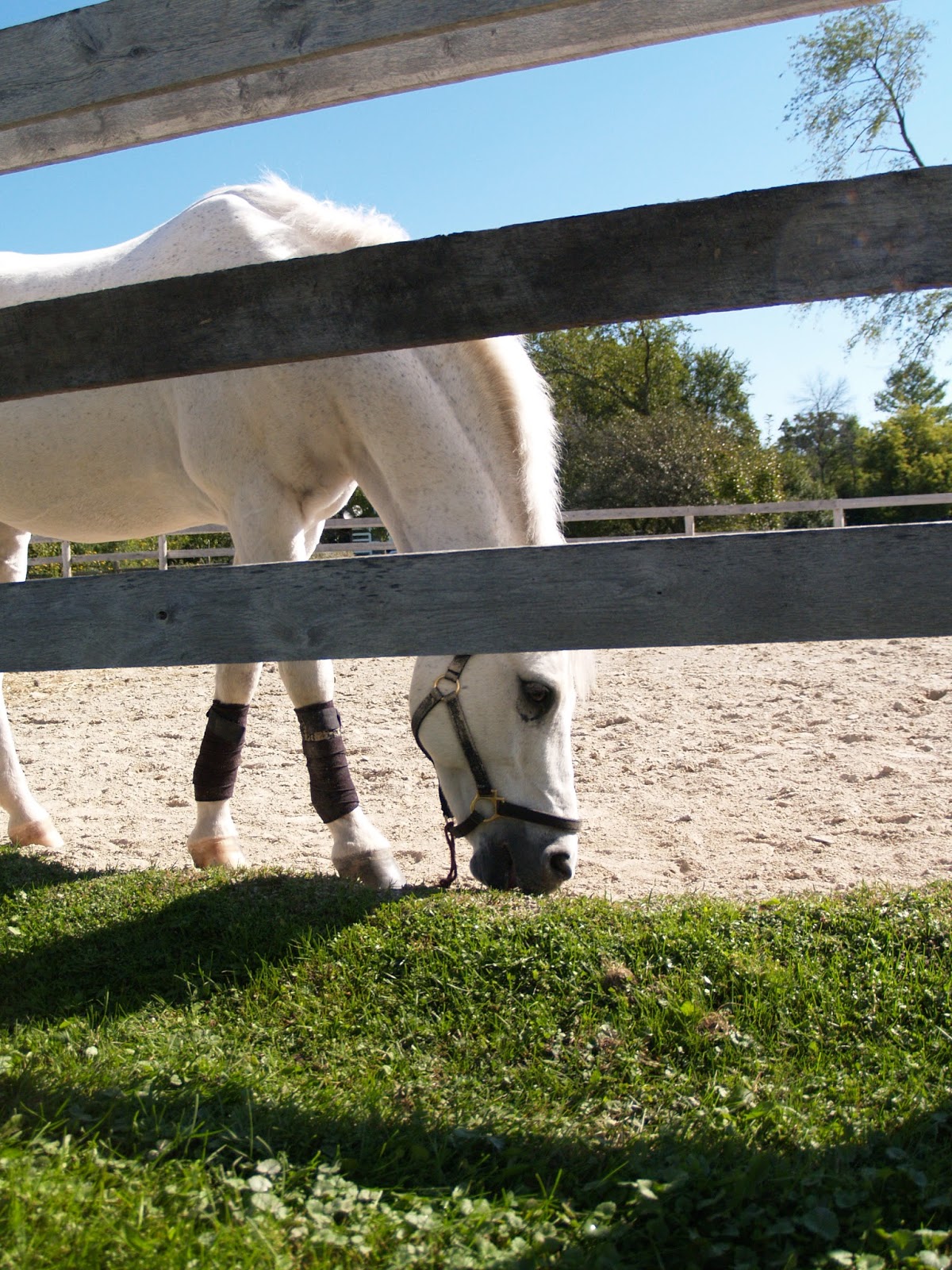
A horse on his treadmill

Elva the farrier.


What he thought of us humans.

What he thought of my camera.

Yeah.

The boys making horse faces.


Strawberry eating her favorite food.


The triceratops got to try on the horseshoe, "so she would not get lost."


Tuesday, September 15, 2015

Dust, not donuts

As I child, I often wondered what God meant by "you shall surely die." Adam and Eve were walking and talking after they ate the fruit. Did God mean they would die a slow death? Or that they lost their "eternal" life? What was this death?


I had a song stuck in my head."Life without Jesus is like a donut. There is a hole in the middle of your heart." I learned it as a child in Sunday school.

But life without Jesus is not like a donut, not even one little bit. Life without Jesus is death. And death is nothing like a donut.

Adam and Eve chose death. The serpent counseled Eve to love herself. She should get to decide what was good and evil. She loved the fruit hanging from the forbidden tree, more than she loved her God. So, she took, and she ate. She then gave it to Adam; he took, and he ate.

Death came immediately. They died the moment they ate the fruit. No, Adam and Eve did not die a slow death. God said, "in the day that you eat of it you shall surely die." Their eyes were opened, just as the serpent promised, unto death. They lost not only their eternal life but life—altogether.

Death was never walking beside your God in the Garden again.

Death was choosing to believe a lie, instead of the truth.

Death was seeing the bone of your bones, flesh of your flesh—ashamed.

Death was losing the bold, unhindered trust you once had in your friend.

Death was being afraid of your Father when he called—because you betrayed him.

Death was homelessness.

Death was hunger.

Death was losing both your sons, because your firstborn child killed his brother.

Death was hate, jealousy, pride, shame, fear.

The rest of Genesis echoed this death. And he died, and he died, and he died.

No. Death is not like a donut. The "hole" in our hearts are not holes. Our hearts are aching abysses of desires, universes of emptiness. We rebelled against our Father who made us. We betrayed him to please ourselves. Lost in sin, we are dead souls, shells full of dust.


So, Jesus wept.

Jesus wept as he stood before Lazarus' tomb. He wept not over Lazarus' physical death; he knew that Lazarus would rise again.  Jesus was weeping for death—altogether. He was weeping for his broken people. Mary and the Jews—the flesh of his flesh, and the bones of his bones—were dead in their hate and jealousy and pride and shame and fear.

So, Jesus said, "I am the way, the truth, and life. I am the door to life. I am the resurrection and the life. Whoever believes in me, though he die, yet shall he live, and everyone who lives and believes in me shall never die."


Soul, come.
Soul, there is now therefore no condemnation for those who are in Christ Jesus. For the law of the Spirit of life has set you free in Christ Jesus from the law of sin and death.

Thursday, September 3, 2015

Choose the harder way

Esther and I met in the rain. She found me under a tree.

Hans and I were newly married, and he was the new minister at our new church. He was playing ultimate frisbee with everyone else, and I did what I always did when I felt insecure — I hid behind a book.

Esther, seventeen at the time, came over in her pale blue t-shirt, with a smile that unveiled her perfect teeth. She said, "Hi, I'm Esther. Which high school do you go to?" I didn't look like the pastor's wife, apparently.

She saved me from sulking that day.


I came across a strange advice from Elisabeth Elliot:
Choose the harder of the two ways. If you have eliminated all other possibilities and there still seem to be two which might please God, choose the more difficult one. "The way is hard, that leads to life," Jesus said, so it is likely that he is asking us to will against our will (A Slow and Certain Light, 115).
She placed this counsel at the very, very end of her book on knowing the will of God. After all is said and done — after we prayed, searched the Scripture, evaluated the motives of our hearts, counted the cost, listened to the counsel of those wiser than ourselves — if both choices seems to be equally good and right, choose the harder way.

But what if the harder way is not God's will? He commands us not to be afraid. God is with us and he is near those whose hearts are bent on knowing and doing his will. Just as he prevented Abraham from sacrificing Isaac, and David from building the temple, he will help us know if this is not the right way. Trust him.

The Lord is always looking at the hearts of his servants. Are we willing to take up staggering tasks for his name's sake? Are we willing to sacrifice, to die to ourselves? The Lord was please with Abraham and David because they were bent on doing hard things—for him, "You did well that it was in your heart" (I Kings 8:18).


"Choose the harder way" has been most helpful in my ordinary, daily deaths to self. Should I wash the dishes or check Facebook? Should I wake up when my alarm rings or sleep for another "five minutes"? After the service on Sunday, do I hang out with my friends or introduce myself to the new person? When provoked, do I speak my mind or sulk or pray for the one provoking me?

Clearly, I am not applying Ms. Elliot's advice quite right. I think she meant it for bigger decisions, when the all the options seem right and faithful. My daily choices are neither big nor are they equally "pleasing to God." The better thing to do is most of the time painfully obvious. The question is whether I would do it.

But—because I am prone to wander, "choose the harder way" pulls me away from my tendency to take the easy route. Ms. Elliot reminds me whom I am following, and why I am doing the things I am doing. I am to follow the pierced feet of my Lord. He chose the steep and the narrow, all the way to Golgotha.

Esther could have just focused on playing frisbee. And our lives would have gone on. And I would have kept pretending like I was reading my book. But the Lord was, and is, gracious. Esther chose to stop playing, and she came over to the lonely person under the tree, in the rain.


O to grace how great a debtor
Daily I’m constrained to be!
Let Thy goodness, like a fetter,
Bind my wandering heart to Thee.
Prone to wander, Lord, I feel it,
Prone to leave the God I love;
Here’s my heart, O take and seal it,
Seal it for Thy courts above.